
Industrial IOT
(Internet Of Things)

From simple production plants to intelligent ecosystems, where human-machine collaboration maximizes efficiency and innovation.

Internet of Things (IOT)

The acronym IoT stands for Internet of Things. It refers to a modern technological paradigm where connectivity is no longer limited to users (Internet of People) but increasingly extends to ‘things’—smart electronic devices equipped with wireless or wired connectivity that leverage the internet to provide advanced functionalities.

This concept is also widely applied in the industrial sector, where connecting machinery and systems to the corporate network has become standard practice over the last few years.
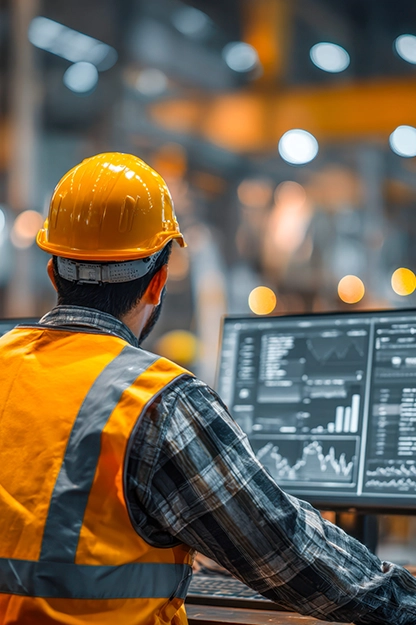
The key feature is the connection of machinery to the corporate network, enabling it to receive operational instructions (such as setpoints and production orders) and transmit real-time data (including piece counts, progress status, and alarms).

How can businesses benefit from IoT?

The Internet of Things is more than just an innovative technology; it is a strategic asset for transforming your business and staying competitive in an increasingly digital marketplace.

In fact, IoT boosts operational efficiency and reduces costs through automation, real-time monitoring, and predictive maintenance. Furthermore, it enhances safety and compliance while unlocking new business opportunities through connected products and advanced data analytics.

Ask for infoAsk for info
The Advantages

Industrial IOT advantages

Productivity, efficiency, and competitiveness are just a few of the factors that make Industrial IoT a tangible advantage for companies choosing to embark on this journey.

Optimization

Real-time monitoring and automation to reduce waste and improve efficiency.

Predictive maintenance

Smart sensors prevent failures, reducing downtime and repair costs.

Safety enhancement

Remote control and advanced data analytics to prevent accidents and security breaches.

Sustainability

Reducing energy consumption and optimizing resources for a lower environmental impact.

Customer Experience

Data collection to deliver tailored products and services.

New business models

Data monetization and faster decision-making.

Some more answers

What is Industrial IoT?

The Industrial Internet of Things (IIoT) is the suite of technologies that connect machinery, plants, and industrial devices to collect, exchange, and analyze data in real time.

When applied to industrial automation, IoT enables the monitoring of production processes, boosts efficiency, and supports data-driven decision-making.

Can I implement IoT in my company?

Industrial IoT can be applied across a wide range of companies, regardless of their size or industry. The process begins by identifying specific business needs, followed by the selection of the most appropriate solution.

What is the purpose of Industrial IoT in a manufacturing plant?

Industrial IoT is designed to make plants smarter and more controllable. It enables you to:

  • monitor production in real time
  • identify inefficiencies and anomalies
  • reduce machine downtime
  • enhance maintenance (including predictive)
  • optimize consumption and performance

In essence, it transforms production data into actionable operational tools.

Can Industrial IoT be integrated into existing plants?

Yes, Industrial IoT can be integrated into existing operational plants.

By using sensors, gateways, and communication systems, it is possible to connect legacy machinery to data collection and analytics platforms without the need for a full equipment overhaul.

This approach allows for the gradual and sustainable implementation of Industry 4.0 principles.

Why should a company start an IoT project?

There are several strategic reasons to adopt IoT that lead to significant competitive advantages, such as enhanced operational efficiency, optimized resource management, and the automation of repetitive tasks. Furthermore, integrated sensors enable predictive maintenance, identifying potential malfunctions to prevent costly breakdowns and production downtime.

Automating production processes means improving efficiency and productivity

Industrial automation

Advanced solutions for process automation

Robots, cobots, and technologies such as Industrial IoT, PLC, HMI, and SCADA to optimize production processes, enhance efficiency, and drive industrial innovation.

Services

Innovation and consultancy for the industrial world

We support businesses with feasibility studies, Industry 4.0/5.0 consulting, grants and incentives, and training to foster innovation and sustainable growth.

Let's talk about your productive process

Speak with one of our engineers to evaluate your project's feasibility.

Request a free quote