
We optimize your end-of-line with custom systems: from intelligent box and bag handling to the creation of perfect, logistics-ready pallets.
Our solutions
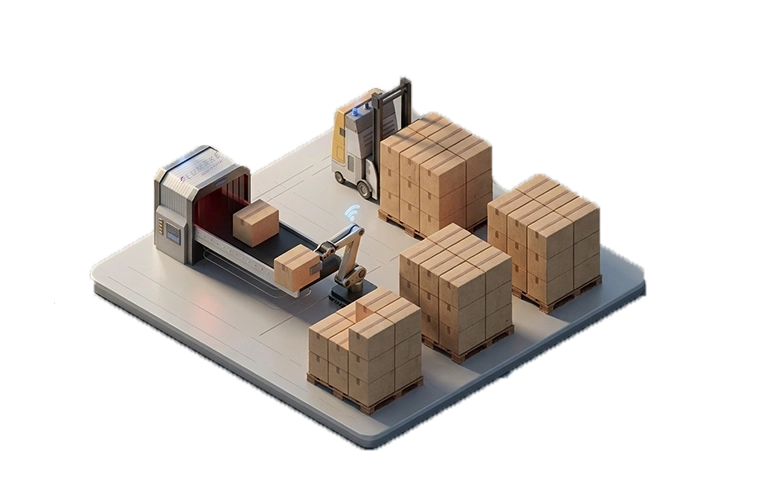
Palletizing systems engineered for your logistical workflow
We develop advanced robotic systems for intelligent end-of-life management, ensuring the safe handling of diverse products (cartons, jerry cans, pouches) and the creation of stable pallets.

Automated stacking
Execution of complex pallet patterns (interlocked or with interlayer sheets), ensuring maximum load compactness and eliminating the risk of collapses.

Line tending
Managing the output flow of packaging machines by coordinating constant product pick-up and precise positioning on the pallet.

Multi-pallet cells
A single robotic cell can manage multiple production lines simultaneously, sorting different SKUs onto separate pallets and optimizing warehouse space.

On-board quality monitoring
Real-time verification of package weight or shape via sensors or machine vision, rejecting non-compliant products before palletization.
Putting robotics at the service of your productivity
We work to guarantee a fluid and efficient end-of-life. We model every load cell around your operational space, defining the most effective palletizing dynamics for your output flows.
- Flow assessment: an accurate analysis of loads, volumes and production rates to eliminate bottlenecks and ensure a constant end-of-line flow.
- Technology selection: identifying the most high-performance robotic kinematics based on the reach of the operating are and planned storage heights.
- Gripper engineering: development of custom-made grippers (vacuum, fork or mechanical clamp) designed to handle products with maximum delicacy.
- System connectivity: integrated dialogue with PLC architecture and Warehouse Management Systems (WMS) for total batch traceability and smart shipping data management.

Tailoring palletizing architecture to your packaging physics
Every load unit presents different challenges: slippery surfaces, high weights or deformable packaging. Our approach adapts the entire automation to the physical specifications or your finished product.
Dedicated gripping systems
We design specific grippers to delicately handle even the most fragile products, ensuring secure grip even at high speeds.
Smart changeover
We integrate software that allows the robot to instantly recalculate the stacking pattern when box or pallet dimensions change.
Harmonized flow
We design the cell as a central hub connecting production to transport, making the end-of-line a seamless, non-stop process.
Application excellence in every sector
From heavy-duty lifting in manufacturing to the high speeds of food & beverage: our palletizing cells ensure consistency and reliability.
Food & beverage
Automotive
Manufacturing
Packaging
Boost your logistical capacity
Consult with our experts to study your end-of-line automation.
Request a free quoteIs manual palletizing the bottleneck of your logistics?
Switching to automation doesn’t just mean physical strain; it means evolving toward a fluid, monitored end-of-line system designed to maximize productivity.
Manual palletizing
- Unstable and irregular loads
- Productivity drop at the end of shifts
- Injuries or occupational diseases (MSDs)
- Difficulty with high speeds or excessive weights
Automated palletizing
- Geometrically perfect and secure pallets
- Constant 24/7 rhythm without breaks
- Worker health and safety protection
- Easy handling of loads up to hundreds of kg
Measurable impact
Our projects' results
Automating the end-of-line guarantees concrete growth in KPIs :
- +40/50% palletizing speed
- – 90% product damage during handling
- -25% indirect logistical costs
- Estimated ROI under 24 months
Automated palletizing: from concept to full operation
We transform your company’s end-of-line through a structured engineering journey designed to maximize storage efficiency.
Technical audit and site survey
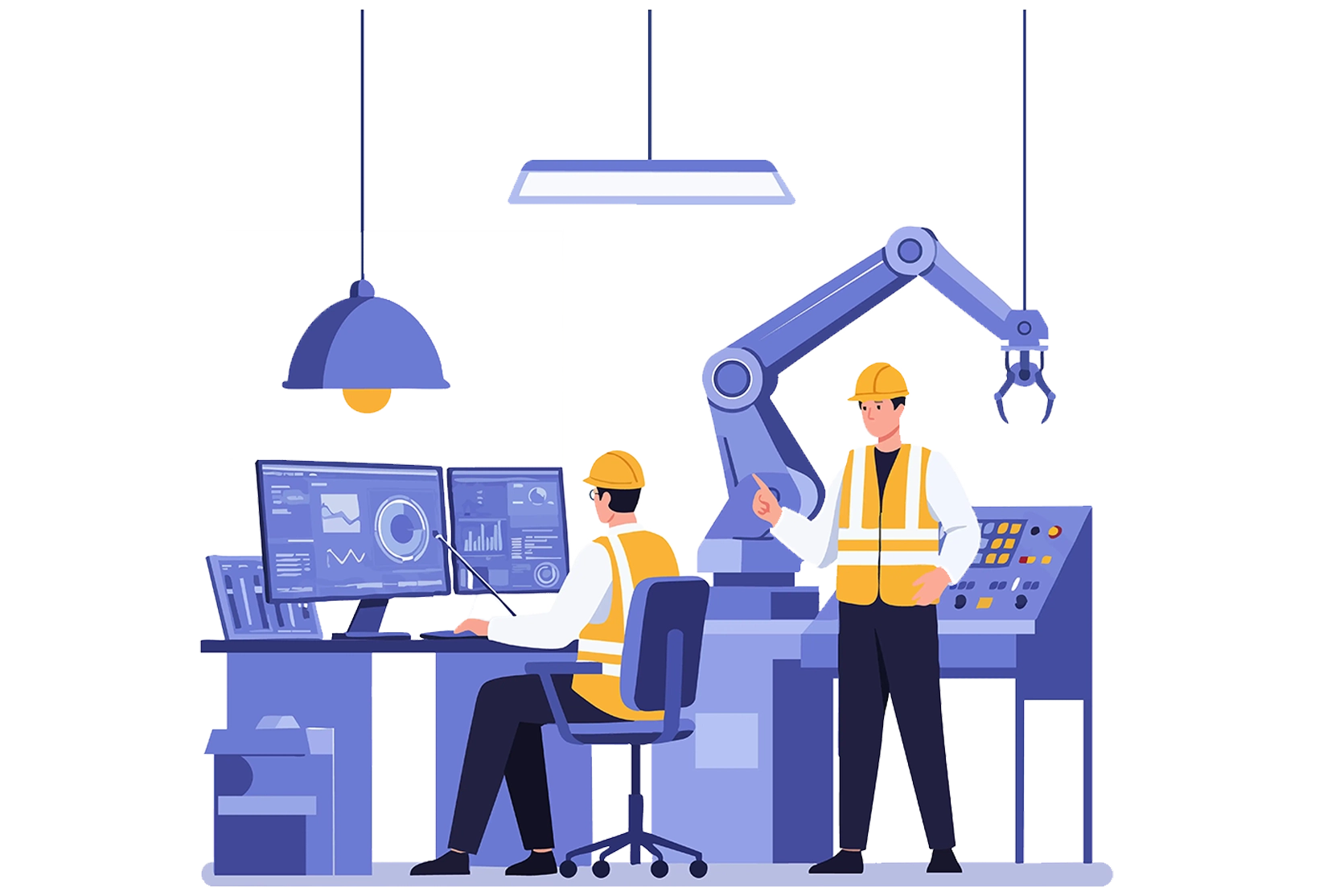
We perform a deep analysis of production flows and available space. We evaluate the physical characteristics of the packages and the required pallet patterns to solve manual loading issues.

Layout development and simulation
We design the robot’s kinematics and define pallet management logic. We present a technical solution based on guaranteed cycles per hour and a transparent, defined investment.
Custom integration and construction
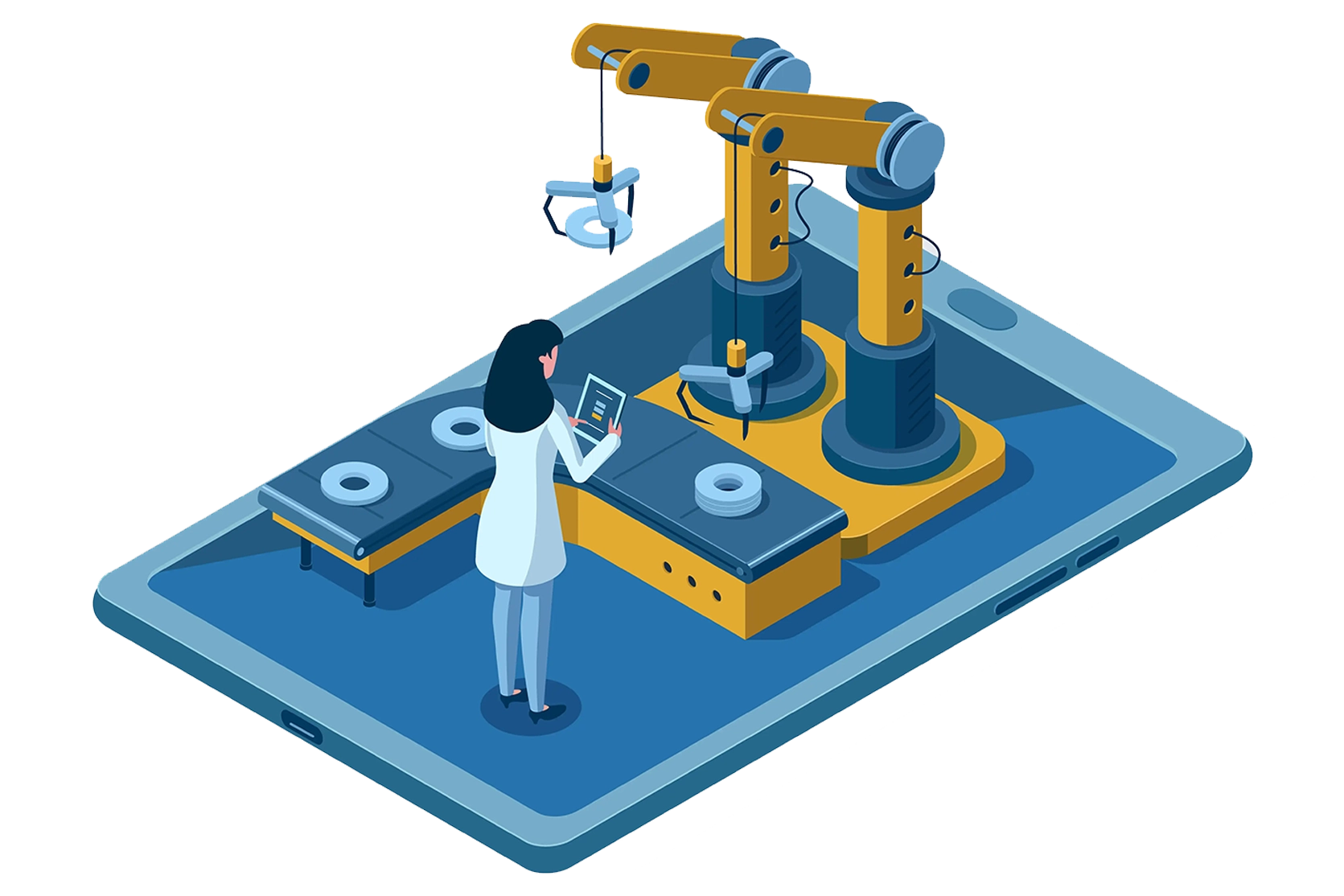
We build the entire palletizing cell in-house. We directly handle both software programming and the design of the End-of-Arm Tooling (EOAT) specific to your products.
Commissioning and know-how transfer
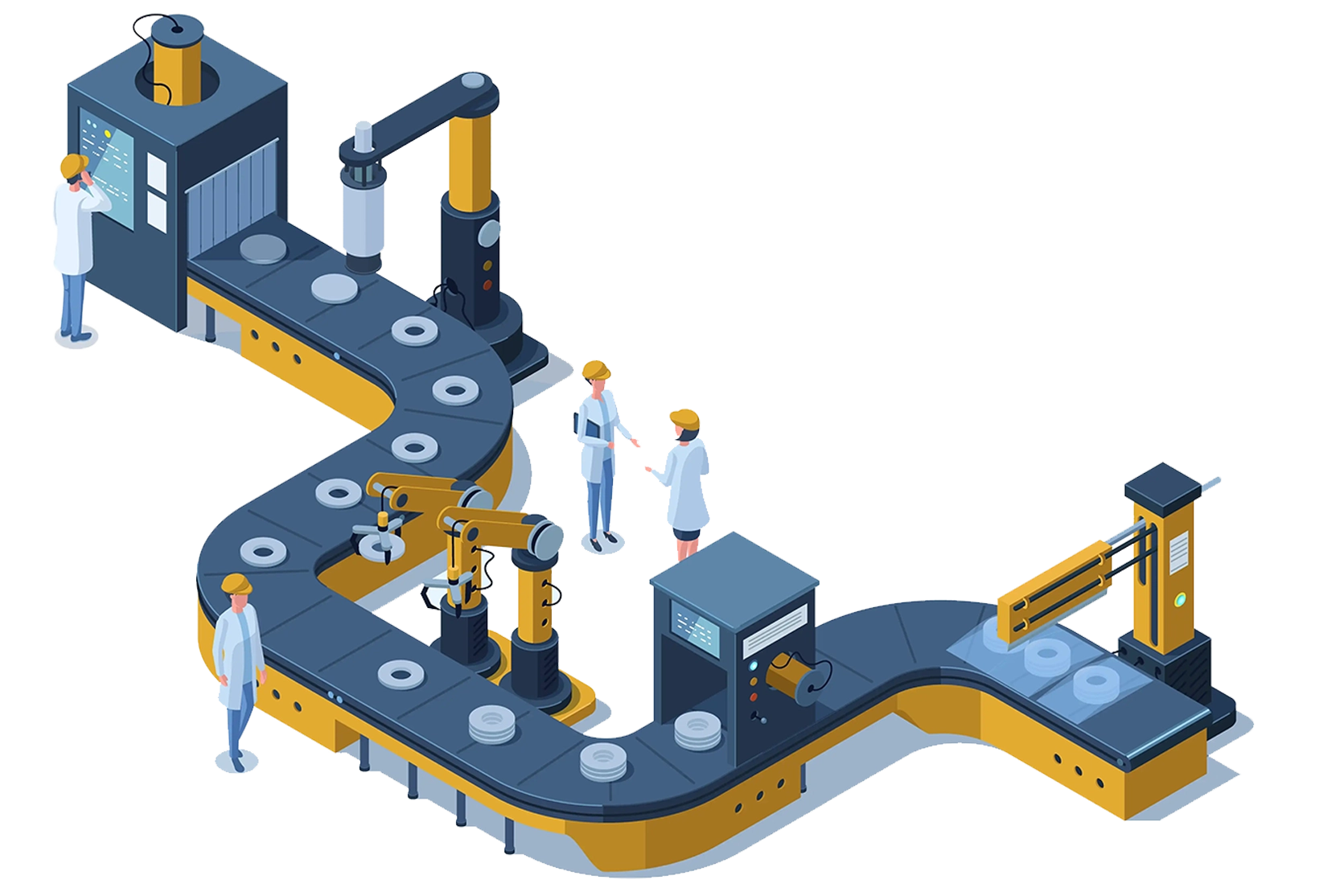
We manage mechanical and electrical installation at your plant. The process concludes with specialist training for your operator, ensuring the team is autonomous in management and pallet format changeovers.
The advantages
Efficiency, safety and precision
End-of-line automation transforms your storage area into a fluid system, eliminating the limitations of manual load handling.
Safety
Eliminates the risk of injuries and occupational diseases by relieving operators of heavy lifting and grueling tasks.
Optimized spaces
Compact and agile robotic cells.
Quality
Ensuring consistent, millimeter-precise stackling.
Constant throughput
Synchronized the end-of-line, eliminating interruptions and delays typical of manual loading.
Productivity
Ensures continuous 24/7 workflows, eliminating bottlenecks and downtime in pallet formation.
Evolution of roles
Replaces alienating labor with supervisory roles, elevating the professionalism of your team.
Grants and incentives
We help you finance your projects.
Contact us to find out about available regional grants and the various incentives you can benefit from.
Automating production processes means improving efficiency and productivity.
Industrial automation
Advanced solutions for process automation
Robots, cobots and technologies such as Industrial IoT, PLC, HMI and SCADA to optimize production processes, enhance efficiency and drive industrial innovation.
Services
Innovation and consultancy for the industrial sector
We support companies through feasibility studies, industry 4.0/5.0 consulting, grants and incentives and training, to foster innovation and sustainable growth.
FAQ
How is pallet stability managed?
The control software calculates the optimal interlocking pattern to distribute weight. If necessary, the robot can automatically insert cardboard interlayer sheets between layers to increase friction and load rigidity during transport.
Can the robot handle different box sizes on the same pallet?
Yes. Through vision systems and “random palletizing” algorithms, our cells can receive products of different sizes in a random sequence, identifying and positioning them to maximize the use of available volume.
What happens if the product arrives misaligned on the belt?
We integrate machine vision systems that communicate the exact position and angle of the package to the robot. The robot corrects its grip and rotates the piece during transit, depositing it onto the pallet in the correct orientation to maintain the planned pattern.
Is it possible to palletize very heavy or very light products?
Absolutely. We select he robot based on the required payload: from small cobots for light packaging to anthropomorphic giants capable of lifting entire product layers or full pallets, always guaranteeing millimeter precision.